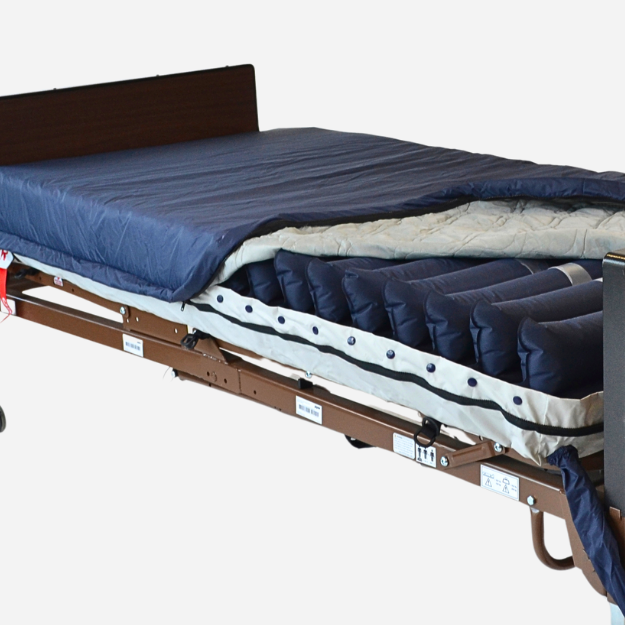
When caring for patients with compromised mobility, standard hospital or foam mattresses often fail to prevent tissue breakdown. For bedbound individuals, long-term friction, shear, moisture, and pressure lead to painful pressure ulcers (bedsores).
As home medical equipment (HME) and clinical pressure-management experts, Cleveland HME provides direct cash-access to advanced therapy mattresses designed to heal existing wounds and prevent new ones from forming.
Basics & Clinical Glossary
- Pressure Ulcer / Bedsore / Decubitus Ulcer: Localized injury to the skin and underlying tissue, typically over a bony prominence (sacrum, heels, hips), caused by prolonged pressure, friction, shear, or moisture.
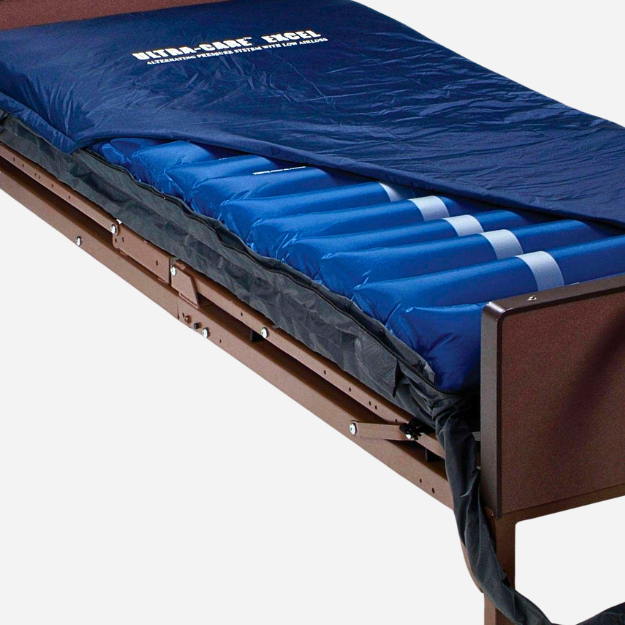
- APM (Alternating Pressure Mattress): A therapeutic mattress replacement consisting of individual air bladders that inflate and deflate in an alternating cycle (e.g., 10–15 minutes). This constantly redistributes body weight and stimulates blood flow to tissue.
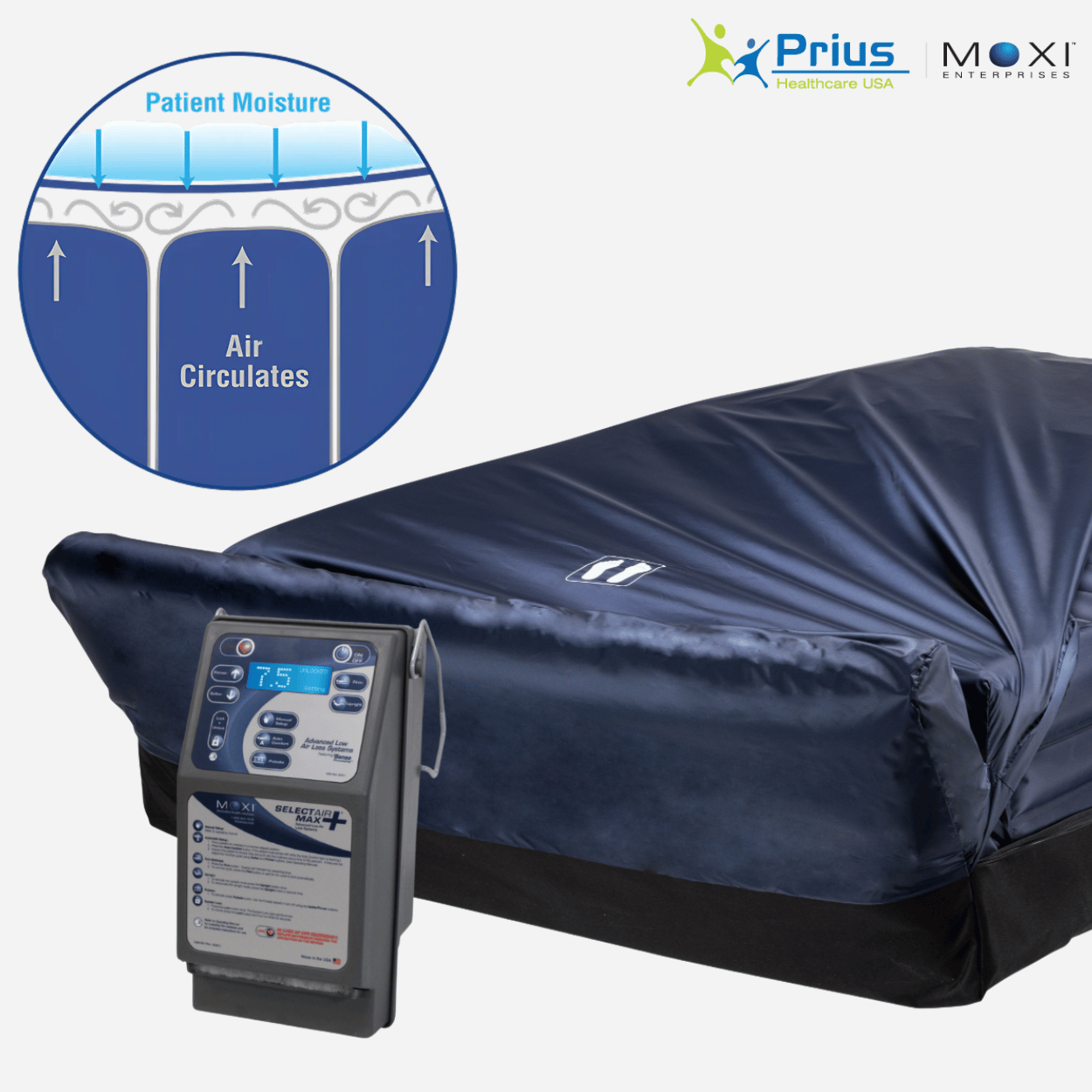
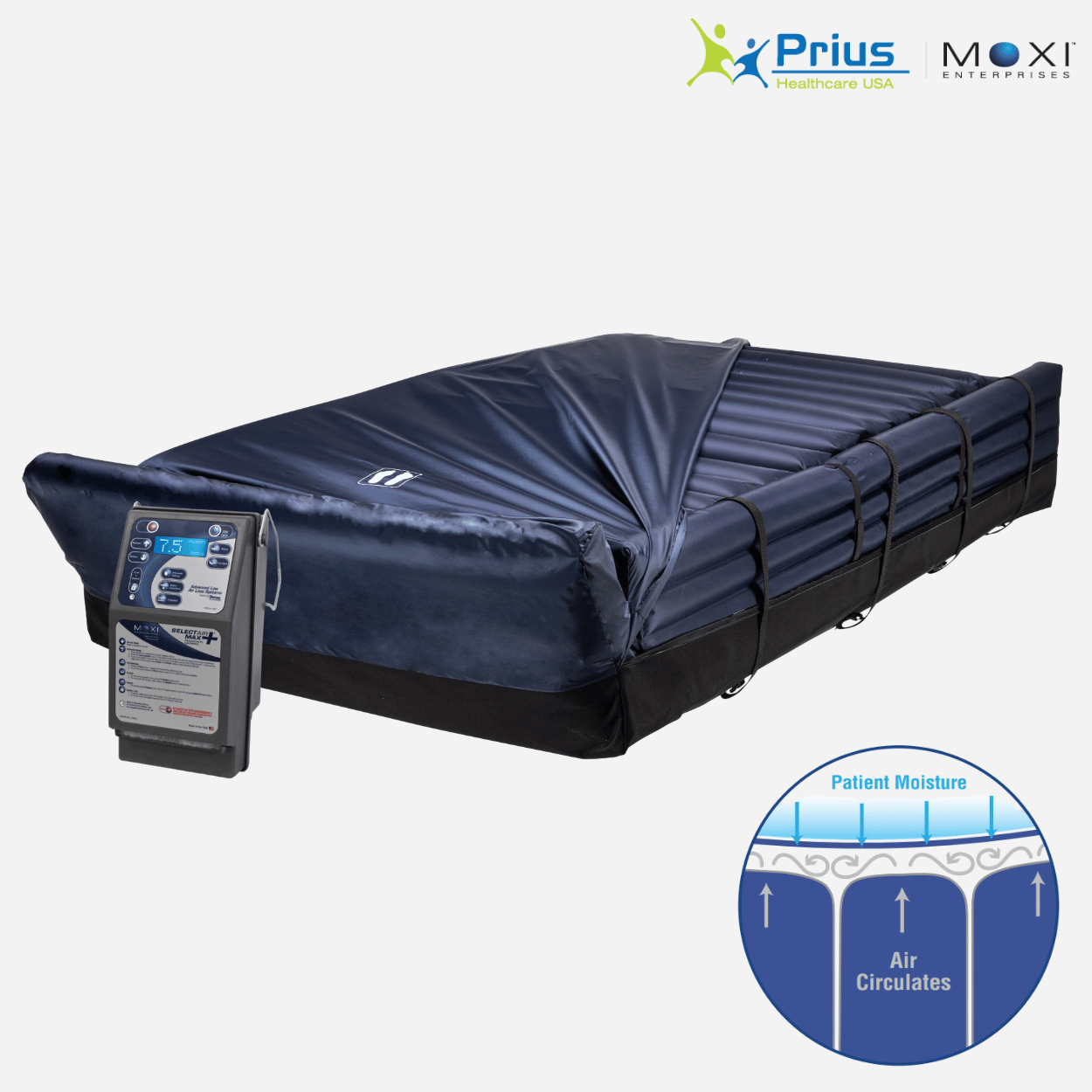
- LAL (Low Air Loss): A therapy feature where tiny, laser-drilled air holes in the mattress bladders continuously release a soft, gentle airflow underneath a vapor-permeable cover. This controls skin microclimate by removing excess moisture, heat, and humidity (maceration prevention).
- Immersion & Envelopment: How deep a patient sinks into a mattress (immersion) and how well the surface molds around the body’s contours (envelopment) to spread body weight over the maximum possible surface area.
- Immersion Depth / Bottoming Out: When an air mattress is too soft, the patient’s body sinks completely through the air bladders and rests directly on the hard bed frame beneath—causing extreme localized pressure.
- Lateral Rotation: A specialized motor system that systematically tilts the patient from side to side (e.g., 20° to 40° angles) at set intervals. This automatically rotates the patient to relieve sacral pressure, assist with pulmonary drainage, and reduce caregiver turning duties.
Why Use a Therapeutic Mattress?
Standard home or foam mattresses apply continuous, unrelieved pressure to bony prominences. When external pressure exceeds capillary blood pressure (roughly 32 mmHg), blood flow to the skin is shut off. Over time, tissue dies, creating a pressure wound.
Therapeutic air systems intervene by:
- Eliminating Peak Pressure: Constantly shifting support points so no single area of skin suffers prolonged ischemia (lack of blood flow).
- Managing Skin Microclimate: Keeping the skin cool and dry to prevent maceration (softening/weakening of the skin due to sweat or incontinence).
- Supporting Clinical Healing: Essential for treating Stage 1 through Stage 4 pressure injuries, post-surgical skin grafts, and flap procedures.
Foam vs. APM / LAL Systems
- Medical Foam / Gel Overlays (Prevention Only):Best For: Patients at low risk for skin breakdown who can still shift their own weight in bed.Limitation: Static surface. Foam traps body heat, collects sweat, and cannot actively cycle pressure or treat advanced Stage 3 or 4 wounds.
- APM / LAL Air Systems (Active Healing & Prevention):Best For: Bedbound patients, individuals with limited mobility, or anyone with existing skin breakdown.Advantage: Dynamic surface. Actively pumps air to alternate pressure zones and uses continuous airflow to keep skin dry.
APM vs. LAL: What's the Difference?
While many premium systems combine both technologies into a single unit, understanding the distinction helps target specific patient needs:
- Alternating Pressure Mattress (APM):Primary Goal: Mechanical pressure redistribution and blood flow stimulation.How It Works: Air cells alternate inflation (Zone A inflates while Zone B deflates).Clinical Focus: Relieves deep tissue pressure over bony prominences.
- Low Air Loss (LAL):Primary Goal: Microclimate management (heat and moisture control).How It Works: Micro-vented air bladders diffuse air upward under the cover.Clinical Focus: Prevents skin maceration from sweat, humidity, or incontinence.
Understanding Hybrid LAL (The Home Care Solution)
Most home care mattresses are Hybrid APM/LAL Systems. Instead of choosing between pressure redistribution or moisture control, a hybrid system combines both technologies into one mattress.
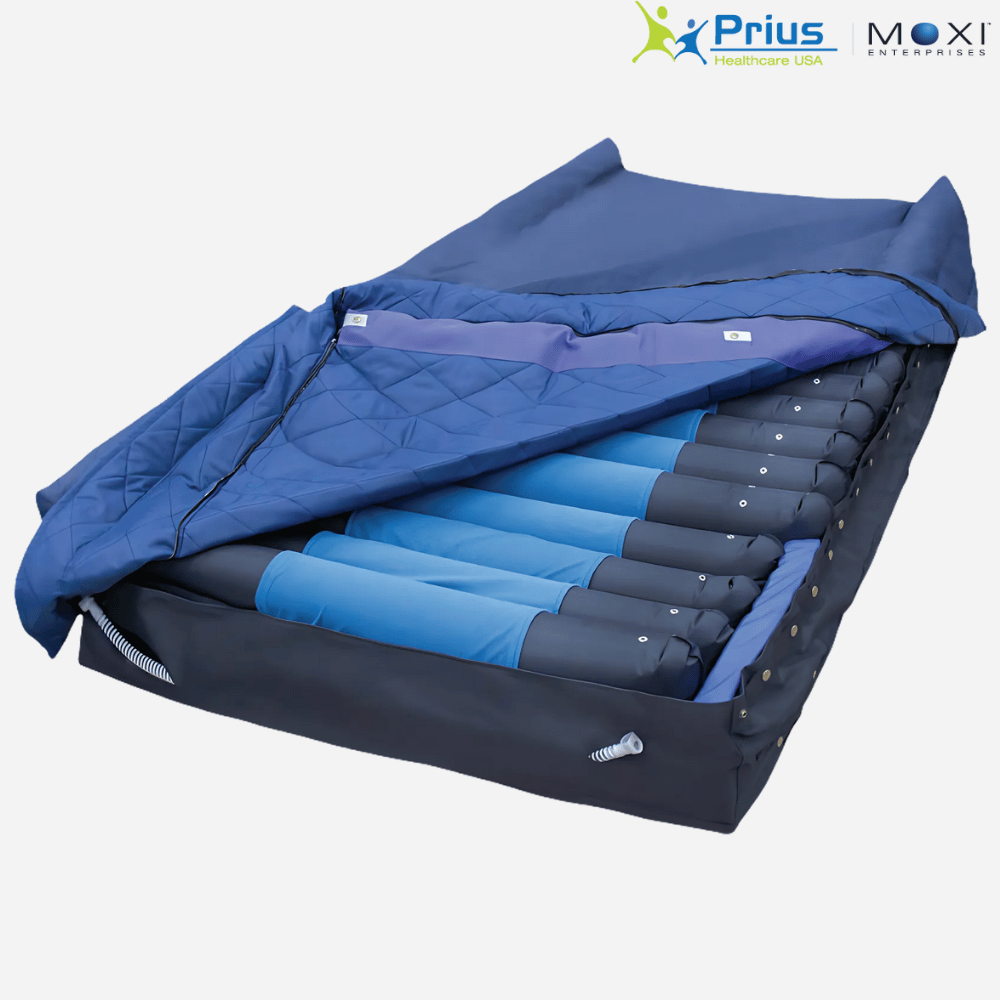
While the internal air bladders systematically inflate and deflate to stimulate blood flow (APM), the top air layer continuously diffuses low-volume air to dry skin perspiration (LAL). This dual-action approach gives caregivers complete 24/7 coverage against both major causes of bedsores—pressure and moisture.
The "True LAL" Blower Difference
Many basic compressor mattresses claim to feature "low air loss," but True LAL is defined by a heavy-duty blower motor. Standard compressors push low air volume measured in Liters Per Minute (LPM), whereas True LAL blowers push massive air volumes measured in Cubic Feet Per Minute (CFM). This high airflow literally floats the patient while instantly evaporating severe moisture, sweat, or heavy wound drainage.
Advanced Therapy: Lateral Rotation Models
For bedbound patients who require continuous turning every two hours, manual turning puts immense physical strain on caregivers and disrupts the patient’s rest. Advanced lateral rotation mattresses automate this entire process.
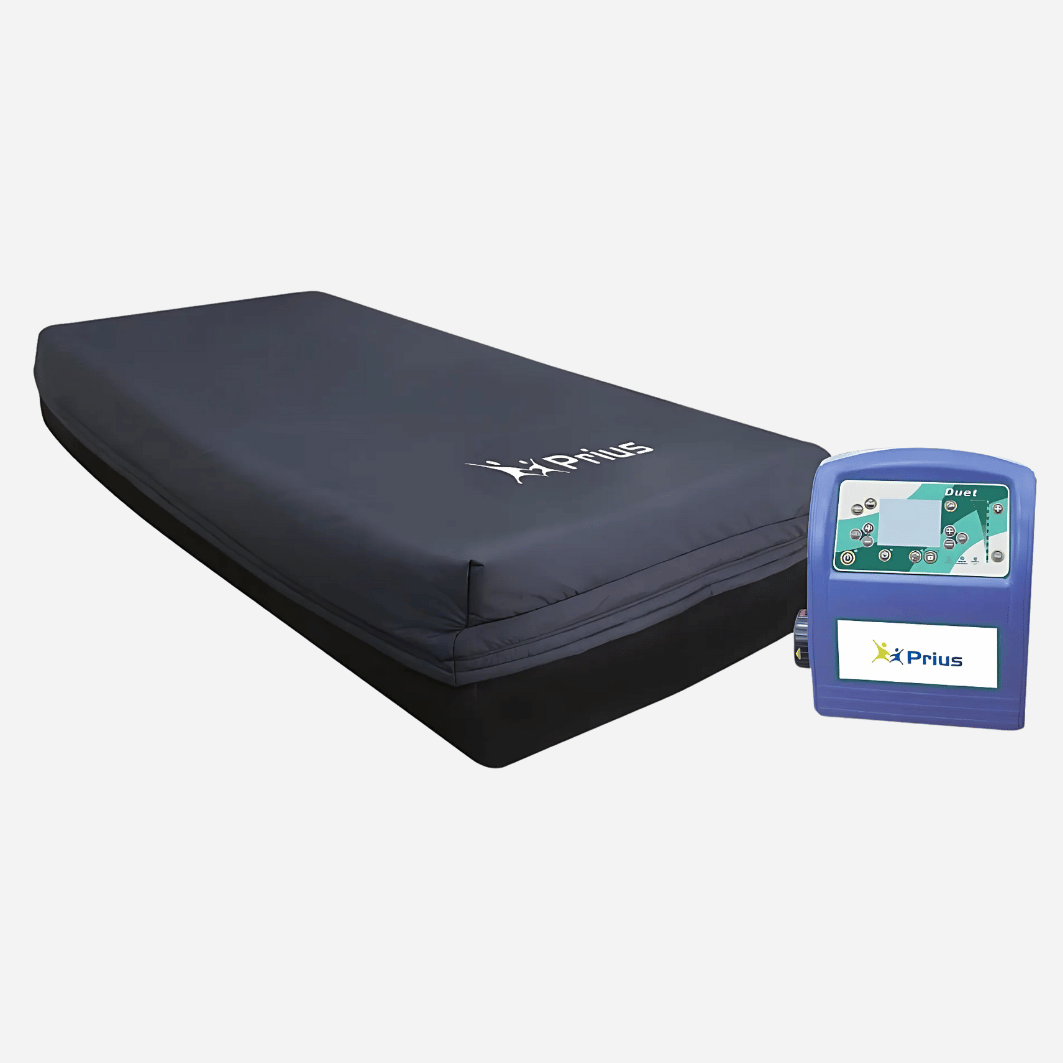
- Prius Duet (Alternating Pressure + Low Air Loss + True Rotation):Therapy Type: Combines APM, LAL, and full-body lateral rotation in one system.Key Feature: Features dedicated side-bolsters and turning bladders that gently tilt the patient side to side at programmable angles and hold times.Clinical Value: Excellent for pulmonary clearance (breaking up lung secretions) and providing gentle, continuous sacral relief without waking the patient.
- Rhythm MultiTurn (Multi-Zone Lateral Turning & Microclimate Therapy):Therapy Type: Advanced multi-turn therapy with customizable rotation zones.Key Feature: Offers precise control over turn degree (left, right, center), cycle times, and firm-surface modes for patient transfers or nursing procedures.Clinical Value: Ideal for high-acuity home care, spinal cord injuries, or heavy care setups where manual turning is physically impractical.
Mission-Critical Buyer & Setup Advice
- The Weight Capacity Rule: Always select a mattress system rated for your patient’s weight. Bariatric patients require wider cells and higher CFM (Cubic Feet per Minute) air pumps to prevent "bottoming out."
- Cell-on-Cell Technology: Look for mattresses designed with a dual-layer cell structure. If power fails or the top layer deflates, the bottom sealed air layer remains inflated so the patient never sinks down onto the hard steel bed frame.
- CPR Rapid Deflate: Ensure your mattress has an easily accessible CPR release valve at the head of the bed. Pulling this valve instantly dumps all air from the mattress in seconds to allow chest compressions in an emergency.
- Quilted, Low-Shear Covers: The top cover must be waterproof, vapor-permeable, antimicrobial, and low-friction to prevent shear injuries when adjusting the head of the bed.


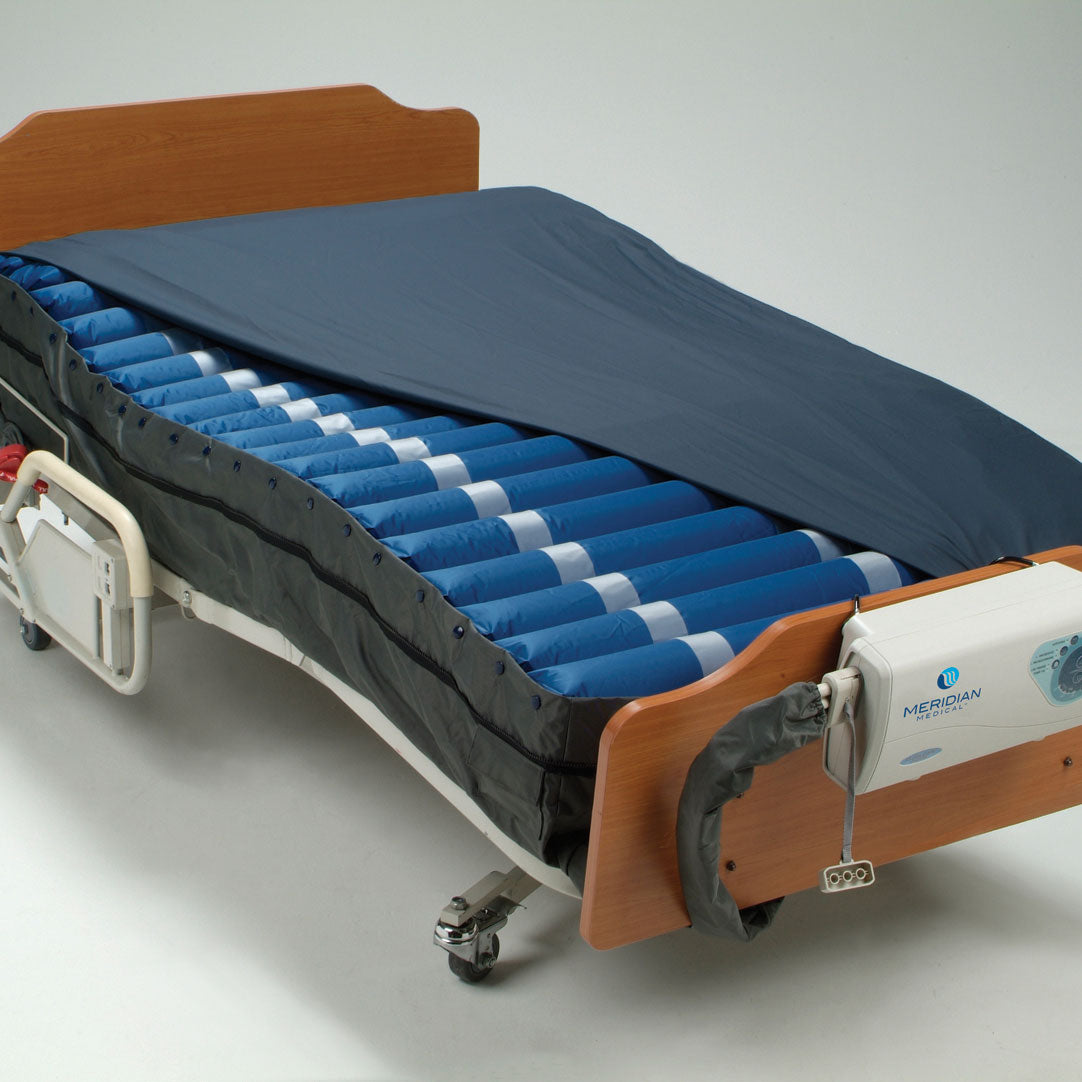
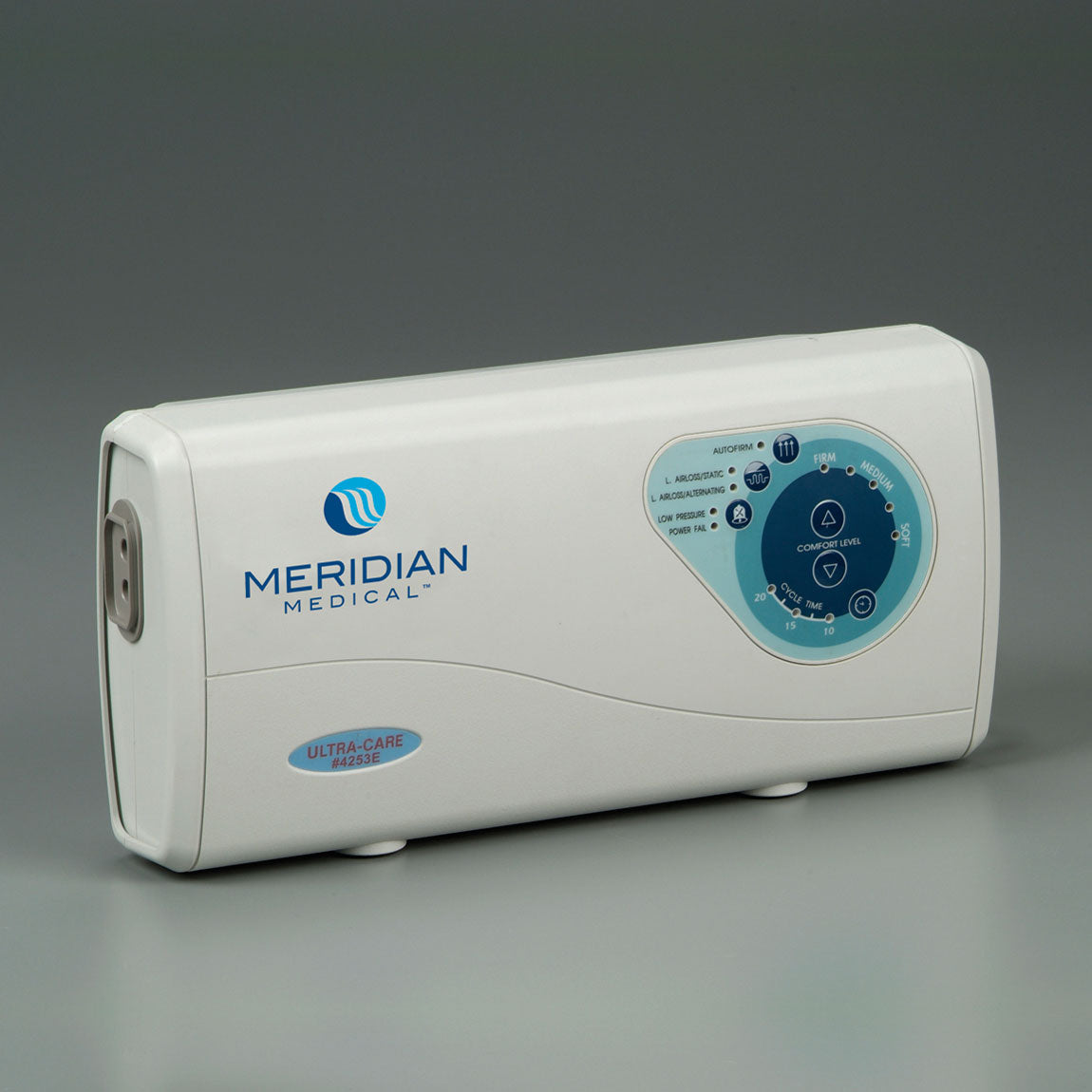
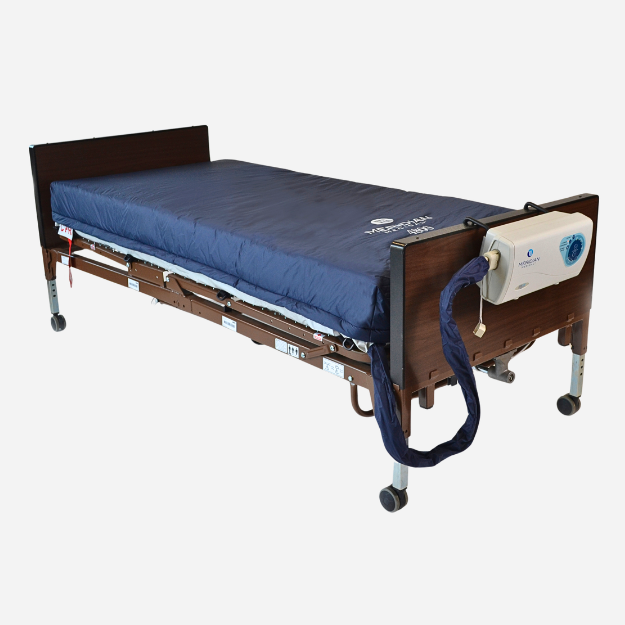
 Air Pressure Mattresses (APM) (Basic models, beginning stages of Ucler mgmt)
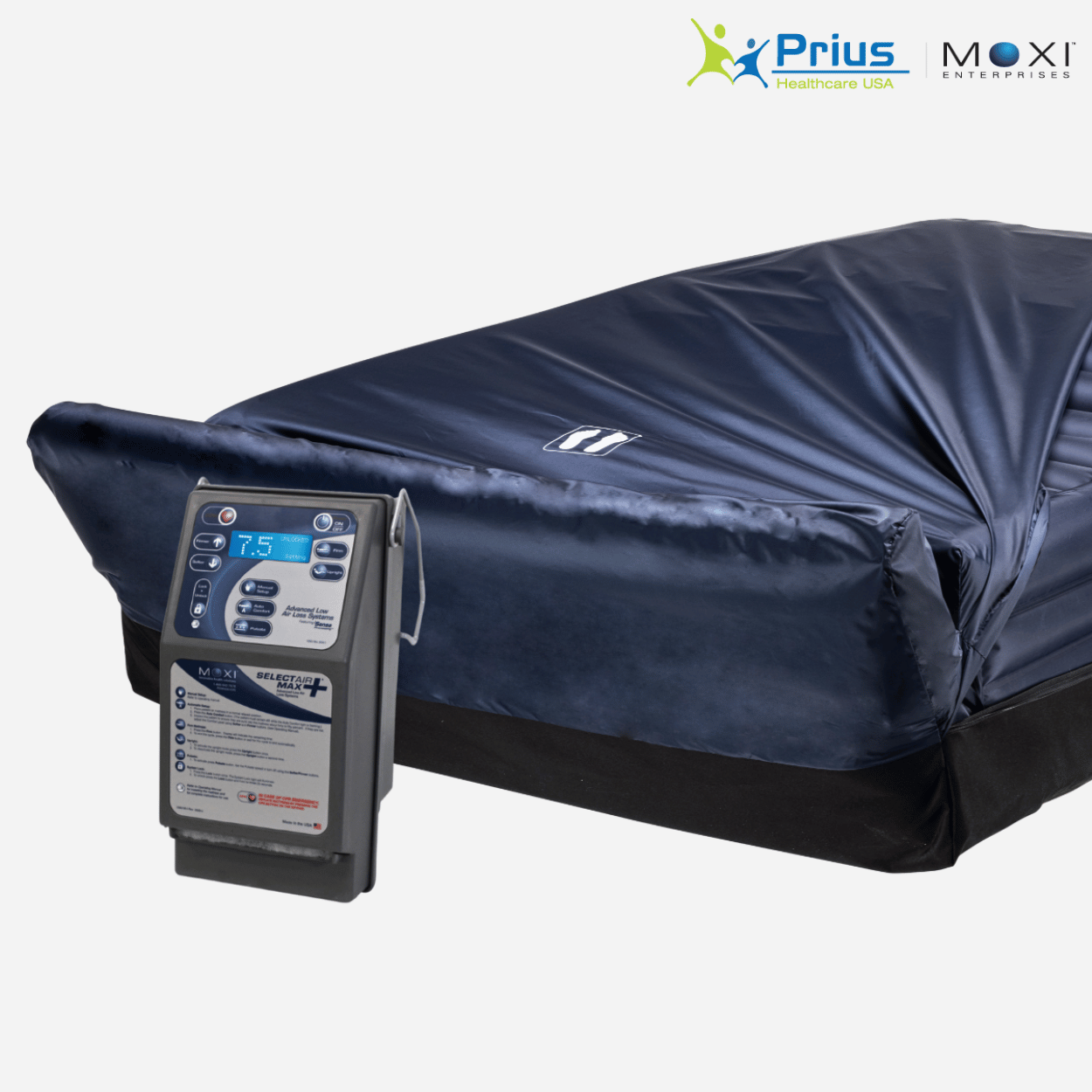
 True Low Air Loss Mattress Systems (Premium, Longterm Care Air Bladder System)
 Lateral Rotatig Low Air Loss Systems (Advanced Ulcer Management)
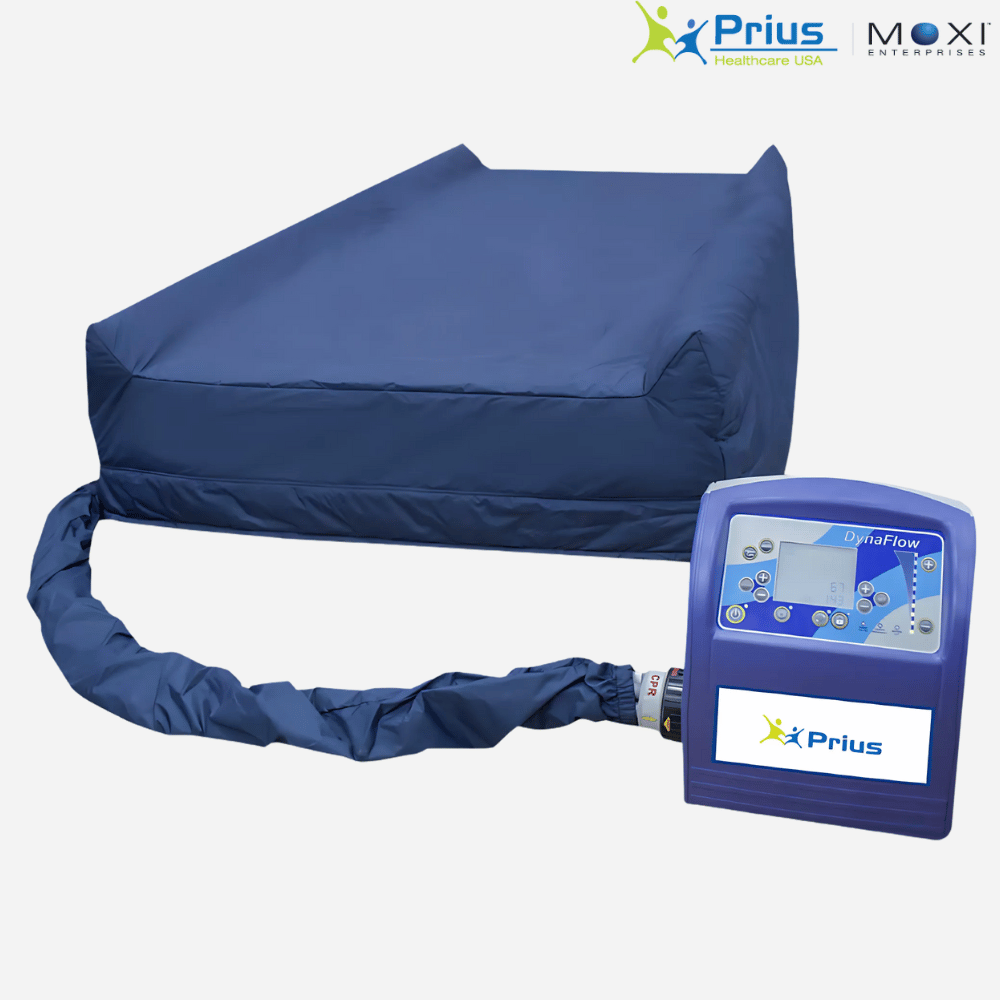
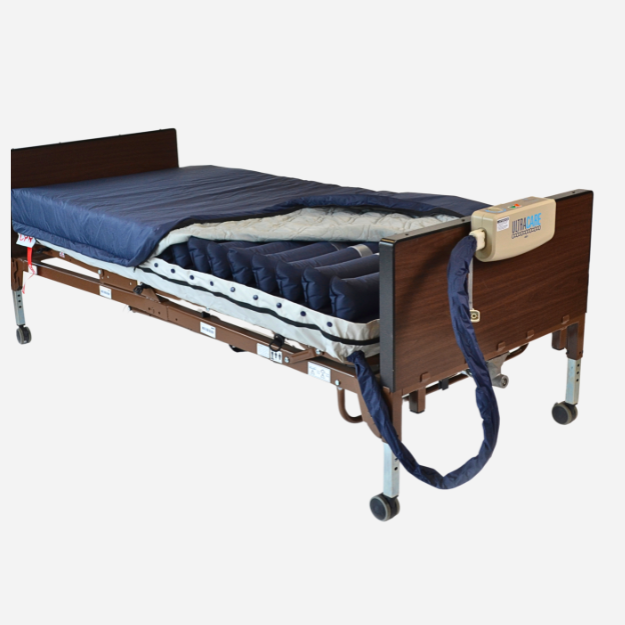
 Hybrid Low Air Loss / Foam Mattress System
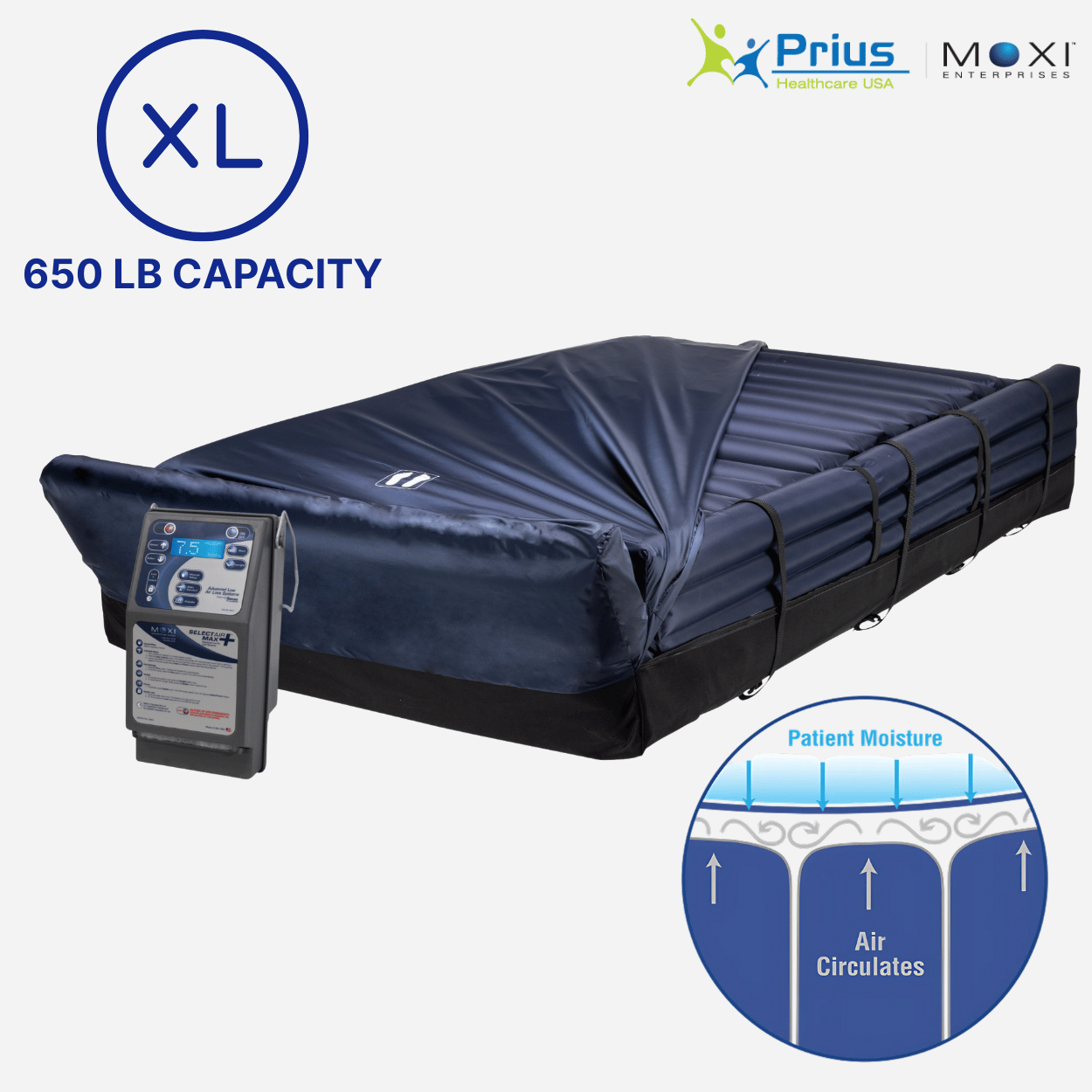 Bariatric Low Air Loss / APM System (425+ lbs)