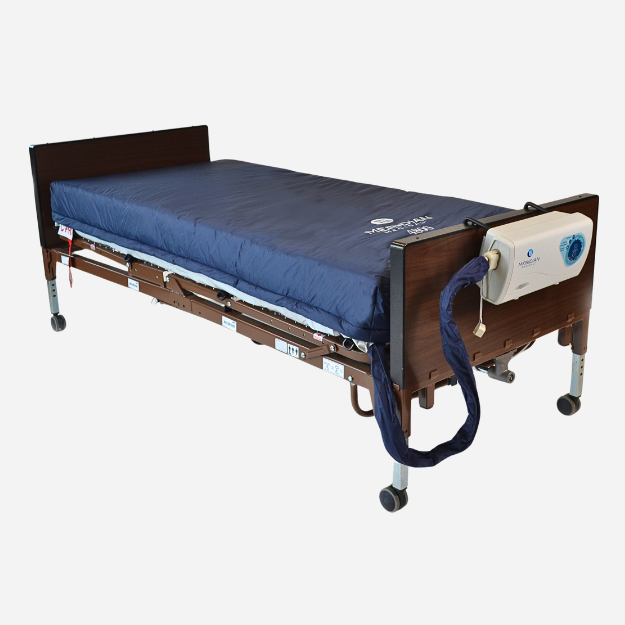
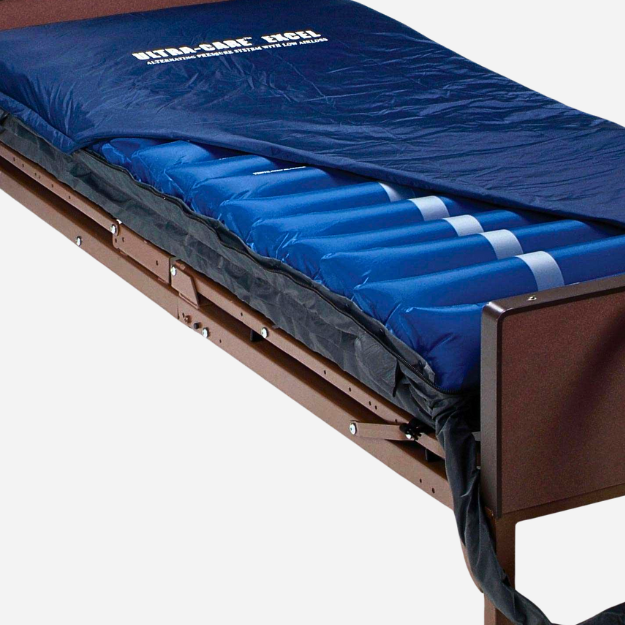
Alternating pressure mattress (APM) systems provide essential, cost-effective pressure relief and clinical support for bedridden or limited-mobility individuals. By dynamically inflating and deflating air cells in a timed cycle, APM systems continuously alter weight-bearing pressure points across the body to promote circulation, prevent skin breakdown, and support early-stage pressure ulcer management.
At Cleveland HME, we supply high-performance APM systems like the best-selling Meridian SatinAir APM System (MER-SAPM-53) for home care setup and immediate delivery across Greater Cleveland.
Product Overview & Key Features
- Meridian SatinAir APM System (MER-SAPM-53): Clinical-grade alternating pressure pad system designed for pressure ulcer prevention.
- 5-Inch Bladder Cells: Dynamic air bladders cycle continuously to unload weight from vulnerable bony prominences.
- 3-Inch High-Density Foam Base: Integrated foam layer provides bottoming-out safety during power outages or patient transfers.
- Alternating Cycle Pump: Quiet motorized pump alternates pressure output every 5 to 10 minutes for active tissue relief.
- Variable Pressure Control: Adjustable dial allows caregivers to customize firmness based on individual patient weight and comfort.
- Quilted Nylon Top Cover: Water-resistant, vapor-permeable cover reduces skin shear and friction while facilitating easy cleaning.
- Emergency CPR Release Valve: Fast-deflation pull tab allows immediate deflation for emergency resuscitation protocols.
Why Use an Alternating Pressure Mattress System?
- Pressure Ulcer Prevention: Prevents the onset of Stage 1 and Stage 2 bedsores by continuously shifting support zones.
- Enhanced Blood Circulation: Alternate cell deflation restores capillary blood flow to tissue compressed by long-term bed rest.
- Cost-Effective Clinical Support: Provides effective home ulcer management without the higher cost of complex Low Air Loss (LAL) beds.
- Comfortable Weight Distribution: Eliminates localized pressure spikes on sacrum, heels, hips, and shoulder blades.
Ideal Users & Clinical Applications
- Stage 1 & Stage 2 Bedsore Patients: Ideal for preventing and treating early-stage pressure injuries.
- Bed-Bound Home Care Patients: Designed for individuals spending 12 or more hours per day in a hospital bed.
- Post-Surgical Recovery: Supports patients recovering from orthopedic or spinal surgeries needing restricted movement.
- Low-to-Medium Risk Individuals: Excellent baseline therapy for patients with limited self-repositioning ability.
Major APM Components & Technical Specs
- System Model: Meridian SatinAir APM System w/ 5" Air Cells & 3" Foam Base (SKU: MER-SAPM-53).
- Total Mattress Height: 8 inches total thickness combining 5-inch air cells over a 3-inch foam safety mattress base.
- Weight Capacity: Supports user weight capacities up to 350 lbs safely.
- Cycle Time: Motorized compressor pump completes full alternating cycle every 10 minutes.
- Pump Air Output: Delivers steady 5 to 8 liters per minute (LPM) airflow.
- Cover Material: Fluid-resistant, non-shear, anti-microbial nylon top cover with secure strap anchors.
- Standard Dimensions: Measures 36" wide by 80" long to fit standard home medical hospital beds.
Frequently Asked Questions (FAQs)
- What is the difference between an Alternating Pressure Mattress (APM) and Low Air Loss (LAL)? APM uses alternating air cycles to shift pressure, while true LAL adds continuous micro-airflow to cool and dry skin moisture.
- Does the Meridian SatinAir stay inflated if the power goes out? Yes, the integrated 3-inch foam base prevents the patient from bottoming out on bed springs during power loss.
- Can this mattress replacement be used on a regular home bed? APM systems are designed for 36" x 80" medical hospital beds to allow proper articulation with head and foot adjustments.
- How often should the air pump cycle? The Meridian system automatically completes its alternating inflation and deflation cycle every 10 minutes.