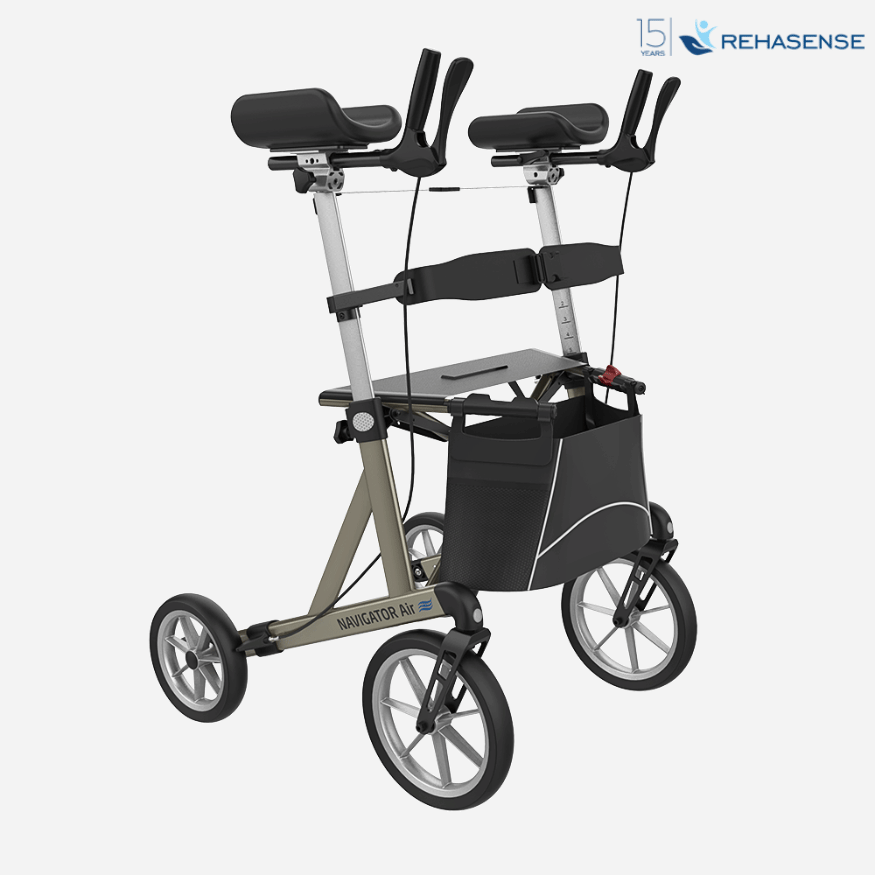
Designed for users managing severe arthritis, neurological conditions, or chronic lower back pain. By replacing traditional handgrips with padded forearm platforms, these specialized rollators shift body weight off the wrists, hands, and fingers and distribute it across the forearms.

This architectural shift forces the user into an upright, forward-looking posture, relieving strain on the spine and encouraging a more natural walking gait.

Standing Upright Arm Support Rollators / Arthritis Rollators
Price
Up to $690.00 Reset
$
$
Color
0 selected Reset
Brand
0 selected Reset
Product type
0 selected Reset
Size
0 selected Reset

Showing 3 of 3 products

Filter and sort

Filter and sort

3 Results

Price

Up to $690.00

$
$
Color
Brand
Product type
Size
Showing 3 of 3 products
PRODUCT INFO

Standing Upright Arm Support Rollators / Arthritis Rollators Info & Guide

Designed for users managing severe arthritis, neurological conditions, or chronic lower back pain. By replacing traditional handgrips with padded forearm platforms, these specialized rollators shift body weight off the wrists, hands, and fingers and distribute it across the forearms. This architectural shift forces the user into an upright, forward-looking posture, relieving strain on the spine and encouraging a more natural walking gait.

  • Core Engineering Advantage: Eliminates the hunched-over posture common with standard walkers. Shifting user weight to the forearm platforms reduces joint pressure in the hands, offering a viable mobility solution for individuals with limited grip strength or severe carpal tunnel.
  • Frame Stability & Wheelbase: Built with elongated frames and wider wheelbases to counter the higher center of gravity caused by standing fully upright. Front forks are dual-reinforced to prevent tipping when maximum upper-body weight is placed on the platforms.

Drive Elevate Upright Walker

A heavy-duty, highly adjustable aluminum forearm rollator engineered to provide structural spinal alignment and robust weight-bearing support at an accessible price point.

  • Weight & Load Performance: Features a reinforced aluminum chassis weighing 23 lbs that manages a safe working load capacity of 300 lbs.
  • Dimensional Ergonomics: Thickly upholstered forearm pads adjust from 39 inches to 44 inches from the floor, comfortably accommodating user heights from approximately 5'3" to 6'5". The top hand grips extend an additional 4 to 6 inches forward for optimal arm extension.
  • Wheel Configuration: Built with an asymmetric wheel design featuring oversized 10-inch multi-terrain front wheels to smoothly climb sidewalk transitions, paired with 8-inch rear casters for controlled tracking.
  • Standard Conveniences: Outfitted with a 21-inch high padded sling seat, an adjustable-height supportive backrest, an integrated cane holder, and a removable zippered tote bag with a shoulder strap.

Rehasense Navigator Air Outdoor Arthritis Rollator

A premium, European-engineered heavy-duty platform walker optimized for active outdoor navigation, off-pavement performance, and specialized ergonomic customization.

  • Weight & Heavy-Duty Performance: Built with structural, aircraft-grade aluminum, maintaining a frame weight of 26.5 lbs while delivering an industry-leading weight capacity of 440 lbs ($200\text{ kg}$).
  • Swivel Forearm Innovation: Features multi-angle rotatable forearm supports that adjust inward at 0°, 22.5°, or 45° angles. This allows customized alignment to match the user's natural elbow-to-wrist anatomy, minimizing shoulder fatigue.
  • All-Terrain Air-Style Wheels: Equipped with massive 10-inch front and 10-inch rear ultra-soft, shock-absorbing polyurethane tires mounted on an extended wheelbase to cushion against gravel, cobblestones, and cracked pavement.
  • Premium Transport Features: Utilizes a patented side-to-side "Click & Safe" locking mechanism that keeps the frame tightly compressed and self-standing when folded, coupled with a wide 22-inch reinforced seat and a heavy-duty 11-lb capacity shopping bag.

Why Choose an Upright Platform Rollator Over a Standard Model?

While a standard rollator requires you to lean forward and grip handles with your hands, an upright platform rollator completely changes how your body interacts with the frame.

1. Orthopedic Relief for Hand, Wrist, and Shoulder Joints

  • The Standard Problem: Traditional rollators force you to bear your upper-body weight directly through your palms, thumbs, and wrists. For anyone with severe osteoarthritis, rheumatoid arthritis, or carpal tunnel syndrome, squeezing a handgrip while absorbing road vibrations quickly becomes painful.
  • The Upright Advantage: Models like the Drive Elevate and Rehasense Navigator Air feature thick, padded forearm cradles. This design shifts your weight away from small, vulnerable finger joints and distributes it across the large skeletal structure of your forearms. Your hands simply guide the unit, eliminating grip fatigue.

2. Neurological and Balance Support

  • The Standard Problem: When using a traditional walker, users frequently drift backward, leaving the walker too far out in front. This creates a highly unstable "pushing a shopping cart" posture that compromises balance.
  • The Upright Advantage: Because your forearms are nested securely in the platform gutters, you are physically stepped into the frame's footprint. This significantly lowers the risk of forward-falling tumbles. The elongated, wider base of upright rollators provides a highly grounded structural anchor for individuals managing Parkinson's, MS, or vertigo.

3. Posture Correction and Spinal Decompression

  • The Standard Problem: Standard walkers naturally encourage a kyphotic (hunched-over) posture. This slouching compresses the lumbar spine, strains neck muscles, and reduces lung expansion.
  • The Upright Advantage: Raising the support height to forearm level forces your thoracic and lumbar spine into an aligned, vertical position. Standing tall naturally opens up the chest cavity for better oxygen intake and keeps your eyes looking forward at your environment rather than down at the ground.
Contact Support For Questions